What the Napili live cams show
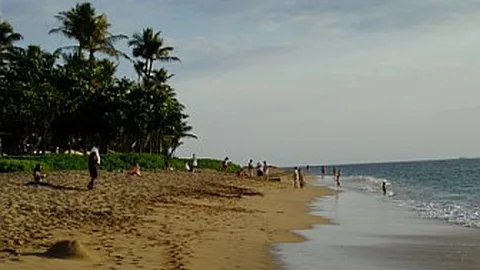
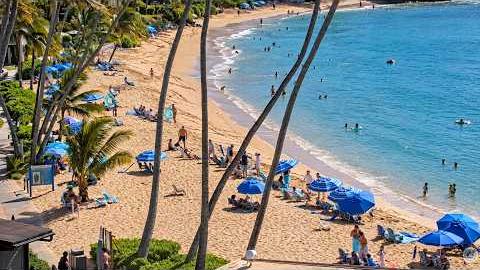
Swimmers and umbrellas on the crescent of Napili Bay
Seen between the tall, leaning trunks of coconut palms, Napili Bay curves away from this camera at the Napili Kai Beach Resort. In the foreground, a path and a low hedge lead to the sand, crowded on a sunny day with blue umbrellas and beach chairs; the beach then bends around the bay, backed by palms and low buildings. On the right, the water is clear enough to show the pale sand bottom, with swimmers and snorkelers spread across the bay.
This is the camera for the water itself: how calm the bay is, whether waves are reaching the sand and how busy the beach gets. Look for snorkelers clustering in one spot, which often means a green sea turtle is feeding nearby.
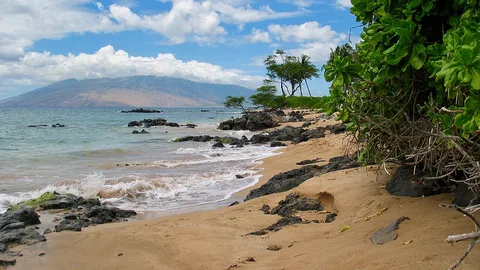
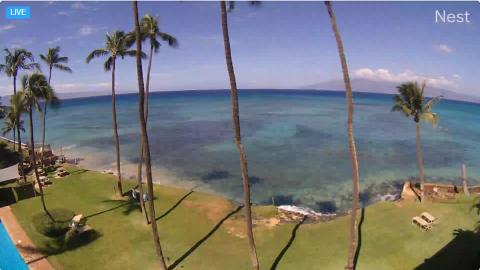
A small cove at Kahana, with Molokai across the channel
High on the Hale Mahina Beach Resort in Kahana, between Napili and Kaanapali, this Google Nest camera looks over the resort's lawn, a corner of its pool and a few loungers. Tall coconut palms frame the view. Below the lawn, a low seawall and black lava rocks surround a small pocket of sand, where the surf rolls in over the reef. Across the channel, the island on the horizon at right is Molokai.
It is a good camera for the size of the surf on this rocky stretch of coast, the wind in the palms and, in winter, whales in the channel. After a while the Nest player may cover the picture with a promotional box; its "Back to live stream" link brings the view back.
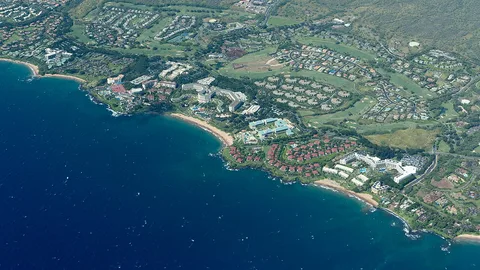
Napili Bay, a crescent between two points
Lava points on both sides wrap around Napili Bay and take much of the energy out of the sea, so on most summer days the water inside is calm and clear, with a gentle slope of soft sand. Green sea turtles graze on the rocks at the edges of the bay and often surface among the swimmers. In winter the picture can change: swells from the north Pacific reach this part of the coast and bring surf and stronger currents into the bay, sometimes for days at a time. Low-rise resorts and condos sit right behind the sand, which keeps the bay feeling more like a neighborhood beach than a resort strip.
When to watch Napili
Hawaii runs on Hawaii-Aleutian Standard Time (UTC−10) all year, with no daylight saving: 3 hours behind the West Coast and 6 behind the East Coast in summer, 2 and 5 in winter. The bay faces west, so the evening is the time to watch: the sun sets over the channel between about 5:45 p.m. in late November and 7:10 p.m. in early July, and rises behind the mountains between about 5:45 and 7:05 a.m. Late morning brings the most people into the water. From roughly December to April, humpback whales winter in the channel between Maui and Molokai.
Around Napili
Kapalua Bay is the next cove north, and the Kapalua Coastal Trail runs along the shore from there. Farther on, Honolua Bay is a marine life conservation district known for snorkeling in summer and for its surf in winter. South along the coast are Kahana, Honokowai and the long beach of Kaanapali.
Visiting Napili
Kapalua airport (JHM) is a short drive away; Kahului (OGG) is about an hour. Public access paths reach Napili Bay between the resorts, but parking is limited, so arrive early. In winter, check the surf before swimming, and keep at least 10 feet from turtles.