Alaska webcams
From the ice of Mendenhall Glacier to the floatplanes of Lake Hood and the tundra of Denali: Alaska, live.
Inside Passage 2
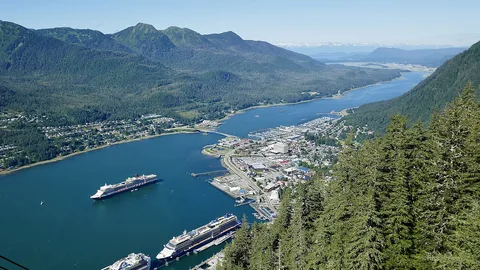
Southeast Alaska on camera: Mendenhall Glacier and its lake near Juneau, and Bartlett Cove in Glacier Bay National Park, with its dock, trail and lower bay.

Interior Alaska 3
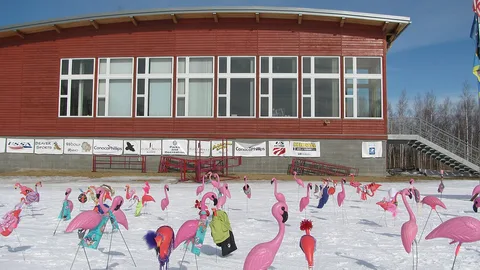
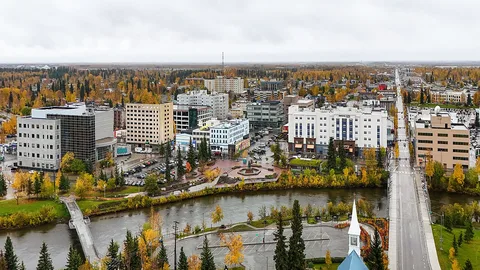
The heart of Alaska between the Alaska Range and the Brooks Range: the Chena River, a muskox pasture and the Birch Hill ski trails in Fairbanks, and Denali seen from Eielson Visitor Center.

Southcentral Alaska 5
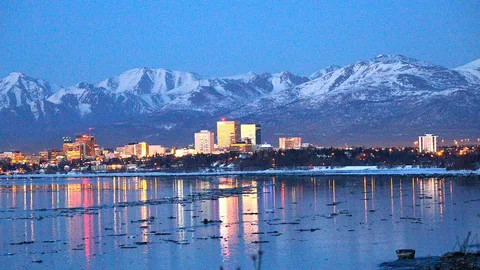
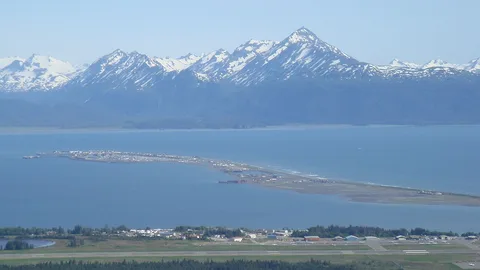
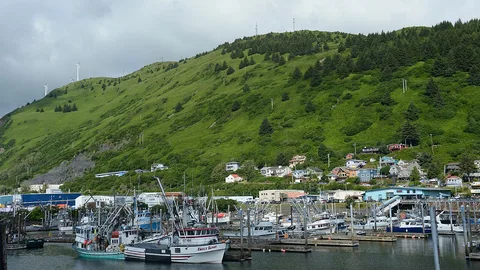
The coast around the Kenai Peninsula, Cook Inlet and Prince William Sound: the boat harbors of Seward and Valdez, Kachemak Bay and the Homer Spit, Anchorage with Lake Hood, and Kodiak out in the Gulf of Alaska.
No place matches this search.
Photos: authors and licences of the 10 images
- Juneau: Ifly6, CC BY-SA 4.0
- Glacier Bay: MusikAnimal, CC BY-SA 4.0
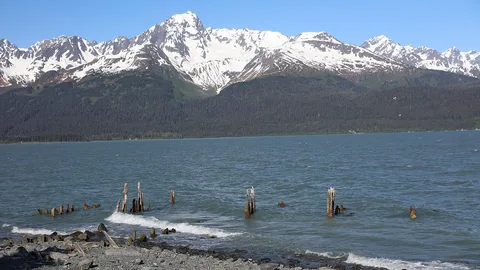
- Seward: Enrico Blasutto, CC BY-SA 4.0
- Homer: Chris Lott from Fairbanks, USA, CC BY 2.0
- Anchorage: Didier Moïse, CC BY-SA 4.0
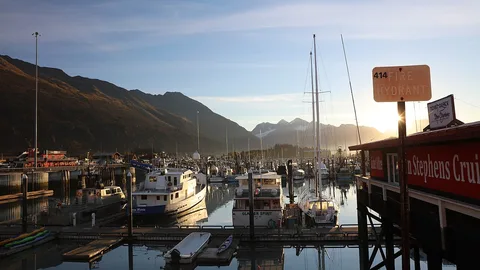
- Valdez: Enrico Blasutto, CC BY-SA 4.0
- Kodiak: James Brooks from Juneau, Alaska, CC BY 2.0
- Fairbanks: Quintin Soloviev, CC BY 4.0
- Birch Hill: Jorgenev, CC0
- Denali National Park: David Dugan, CC BY-SA 3.0
Two coasts and the Interior
Most travelers meet Alaska from the water. The cruise route of the Inside Passage threads between the islands of the Southeast panhandle, and many voyages begin or end at Seward, on the Gulf of Alaska, where the railroad runs north to Anchorage, Denali and Fairbanks.
The Inside Passage
Juneau, the state capital, can only be reached by sea or air, and Mendenhall Glacier comes down almost to its suburbs. To the west, Glacier Bay National Park keeps its headquarters at Bartlett Cove, near the mouth of a bay that the ice covered only a few centuries ago.
Southcentral Alaska
Seward sits at the head of Resurrection Bay, the starting point for boat trips into Kenai Fjords National Park. Homer, at the end of the road on Kachemak Bay, looks across the water to the Kenai Mountains and across Cook Inlet to its volcanoes. Anchorage, the largest city, spreads between Cook Inlet and the Chugach Mountains. To the east, Valdez lies at the head of a fjord of Prince William Sound, at the end of the Trans-Alaska Pipeline, and out in the Gulf of Alaska, Kodiak is the fishing town of the island of the same name, reached only by plane or ferry.
Interior Alaska
Fairbanks, the largest city of the Interior, grew from a gold rush trading post on the Chena River, and its ski trails climb Birch Hill on the edge of town. To the south, Denali National Park surrounds the highest mountain in North America, seen from Eielson Visitor Center, deep in the park.
Who runs the cameras
The cameras belong to the National Park Service at Glacier Bay and Denali, to explore.org with the Forest Service at Mendenhall Glacier and with the University of Alaska Fairbanks at its muskox pasture, to the City of Valdez, to the visitor bureau and the ski club in Fairbanks, to tour companies in the Seward harbor, to floatplane operators on Lake Hood and in Kodiak, and to public agencies: the Federal Aviation Administration, whose weather cameras serve pilots across the state, the Alaska Volcano Observatory and the state transportation department. Many are still images rather than video.
Light and time
Alaska keeps its own time zone, one hour behind the Pacific coast: UTC−9 in winter and UTC−8 from March to early November. Daylight changes more than anywhere else in the country. Around the June solstice the sun sets after 10 p.m. in Juneau and close to midnight in Anchorage, and in Fairbanks it stays up for nearly 22 hours. In late December it is up for only about six hours in Juneau, five and a half in Anchorage and less than four in Fairbanks, so the cameras are dark for much of the winter day.
Weather on the coast and inland
The Southeast is a temperate rainforest, with rain or snow on most days of the year, and clouds often hide the peaks; Valdez, on Prince William Sound, is known for some of the heaviest snowfall of any town in the country. The Interior is drier, with warm summers and long, deeply cold winters. Clear days are worth catching on any of these cameras: they bring out the snow on the mountains, the blue of the glaciers and the color of the water.