

What the Mammoth Mountain live cams show
The Minarets and the Ritter Range from the summit of Mammoth Mountain
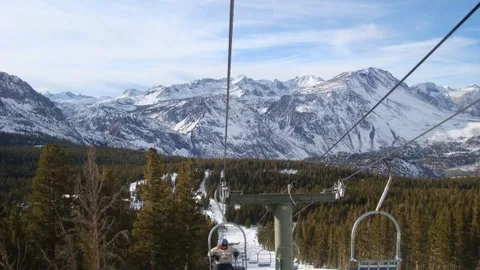
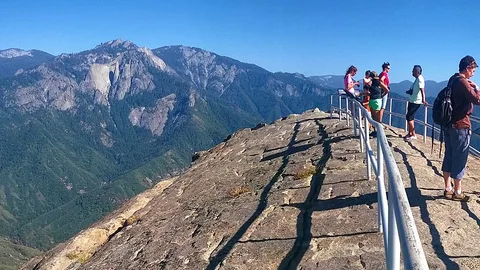
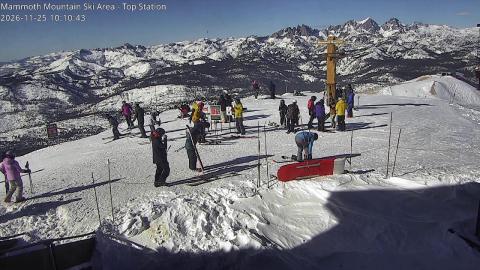
This Mammoth Mountain camera stands at the Top Station, the summit gondola building at more than 11,000 feet. A wooden signpost and snow fences sit on the summit ridge in front, and beyond them the view drops into the deep canyon of the Middle Fork of the San Joaquin River and rises again to the jagged Minarets and the peaks of the Ritter Range, which lie to the west. On clear days it shows the whole skyline of the Sierra crest; in storms, the summit disappears into cloud and blowing snow. It is the camera to check for fresh snow at the top and for wind on the ridge.
Snow on the upper slopes of Mammoth Mountain, from mid-mountain
McCoy Station is the mid-mountain hub of Mammoth Mountain, named for Dave McCoy, who built the ski area, and this camera turns between two views from there: up the wide, open slopes of the upper mountain toward the summit ridge, and across the lift terminals and buildings around the station. Posts and fences mark the runs. It is the best of the mountain's cameras to judge snow cover on the open upper slopes, which hold snow later into spring than the runs lower down, and to watch the snowcats and lifts start up early in the season.
The base of Mammoth Mountain, its gondola and the woolly mammoth statue
Mammoth Mountain's Woolly camera watches the Main Lodge base area, where the gondola to the summit starts. It swings between the road and the parking area in front of the lodge, the gondola station with its cabins, and the big statue of a woolly mammoth on its stone base, with pines and the slopes of the mountain behind. It shows how full the lots are and how much snow lies around the base, and on stormy mornings whether the roads up from town have been plowed.
A ski mountain on a volcano
Mammoth Mountain is a lava dome complex built by eruptions that ended about 57,000 years ago; it still releases volcanic gases in places. Its summit stands a little above 11,000 feet, and the ski area spreads over about 3,500 acres with a vertical drop of some 3,100 feet. Dave McCoy started skiing here with a rope tow in the 1940s, received a Forest Service permit in 1953 and built the first chairlift in 1955; the mid-mountain station bears his name. The mountain catches the big Pacific storms as they cross the Sierra crest and averages around 400 inches of snow a year, so the season usually runs from November to May and, in deep winters, into summer.
When to watch Mammoth Mountain
The mountain keeps Pacific Time, UTC−8 in winter and UTC−7 from March to early November. Early morning shows fresh snow and grooming before the lifts open; storms can hide the summit for days, and the summit cam is the one to watch for clearing skies. In summer the slopes turn to gray pumice and the mountain becomes a bike park, with the gondola carrying sightseers to the top.
Around Mammoth Mountain
Main Lodge sits at the top of the road from town, Canyon Lodge and Eagle Lodge serve the lower slopes on the town side, and the Village Gondola links Canyon Lodge with The Village. Behind the mountain, a road drops to Devils Postpile National Monument and the headwaters of the San Joaquin River.
Visiting Mammoth Mountain
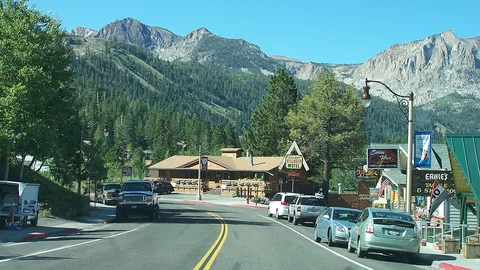
From the town of Mammoth Lakes, Minaret Road climbs to Main Lodge and the base of the gondola; free shuttle buses run between town and the lodges in winter. The summit is high enough for altitude to be felt, so go easy on the first day, and dress for strong wind on the ridge even on sunny days.