What the Mammoth Lakes live cams show
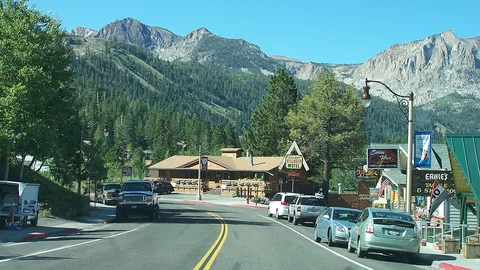
Snow, traffic and the ridges above town in Mammoth Lakes
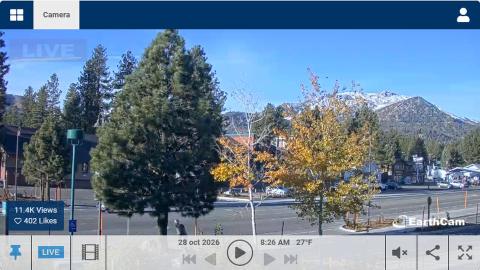
Mammoth Lakes Tourism shows this EarthCam camera on its webcam page. It looks over a street and a parking lot in town, framed by tall pines and, in fall, aspens turning yellow, with shops and lodges along the road behind. Above the rooftops rise the high ridges around the town, white after the first storms of the season. It shows the weather in town at a glance: whether snow is falling or the roads are bare, how busy the streets are, and how much snow has stuck on the mountains. The player also offers a 24-hour stream to look back over the day.
Mammoth's pedestrian plaza by the Village Gondola
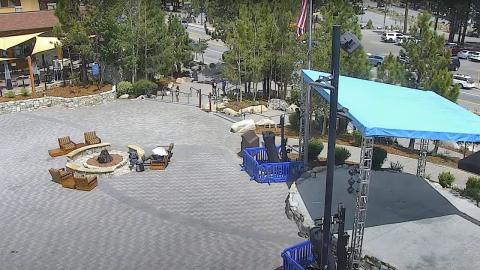
Mammoth Mountain's camera in The Village looks over the cobbled plaza at the heart of the resort town, where the Village Gondola leaves for Canyon Lodge. In front stands a restaurant patio with clear dining domes, and lodges with wooden balconies rise around the square. It shows how lively the plaza is, with skiers coming off the gondola in winter afternoons and walkers and bikes in summer, and whether snow has been cleared or is falling. The view is best in the evening after a day on the mountain, when the restaurants fill up.
A town on a volcano's doorstep
Mammoth Lakes began as a gold and silver mining camp in the 1870s and grew into a resort after the ski area opened in the 1950s; it is still the only incorporated town in Mono County. The lakes that give it its name lie in the Lakes Basin just above town, among them Lake Mary, Lake Mamie, Twin Lakes and Horseshoe Lake. The whole area sits inside the Long Valley Caldera, the remains of an enormous eruption, and Mammoth Mountain itself is a lava dome: in places around Horseshoe Lake, gases from below still kill trees. In winter the town lives on skiing; in summer on trout fishing, hiking, mountain biking and the trails toward the John Muir Trail.
When to watch Mammoth Lakes
Mammoth Lakes keeps Pacific Time, UTC−8 in winter and UTC−7 from March to early November. The sun rises between about 5:35 a.m. in June and 7:20 a.m. in early spring, and sets between about 4:40 p.m. in December and 8:20 p.m. in late June. Snow can come from October to May, often in big Pacific storms that drop several feet at a time; summers are dry and sunny, with cool nights.
Around Mammoth Lakes
Devils Postpile National Monument, with its columns of basalt and Rainbow Falls, is in the valley behind Mammoth Mountain. Mono Lake and its tufa towers are about 25 miles north on U.S. 395, and beyond them the Tioga Road climbs into Yosemite in summer. Hot springs dot the valley floor east of town, and Convict Lake lies a few miles south.
Visiting Mammoth Lakes
Most visitors drive up U.S. 395 along the eastern Sierra, about 5 hours from Los Angeles and 3 hours from Reno. The small Mammoth Yosemite Airport (MMH) lies east of town. In winter, chains or four-wheel drive may be required on the roads, and free shuttle buses run between the lodging areas, The Village and the ski lifts.