What the Santa Monica live cams show
Palms, sand and the open bay from the Ocean Avenue bluff
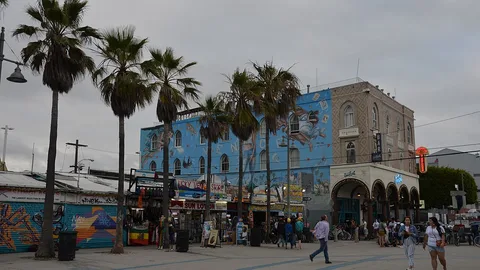
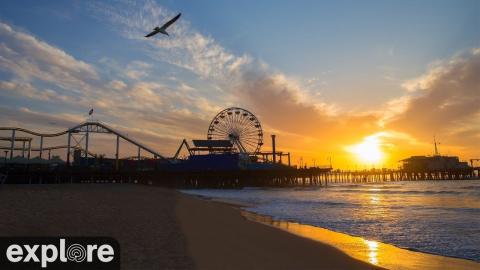
Explore.org, a nonprofit network of nature cams, streams this view from high on the bluff along Ocean Avenue, facing west over Santa Monica Bay. Palm fronds from the park below frame the picture on both sides, a strip of sand shows along the bottom, and the rest is water and sky out to a long, flat horizon. With so much sea in the frame, this is the camera for reading the weather: haze, the gray marine layer rolling in or burning off, and the wind texture on the bay. Explore set it up mainly to share the sunset, and evening is when it earns its place, as the sun sinks into the Pacific straight ahead.
Strollers, stalls and umbrellas crowding the pier deck
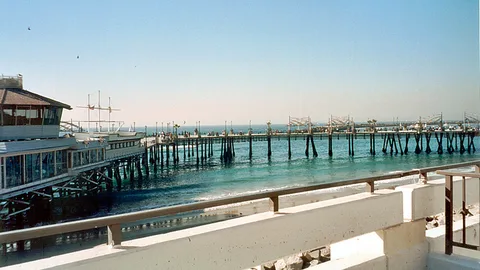
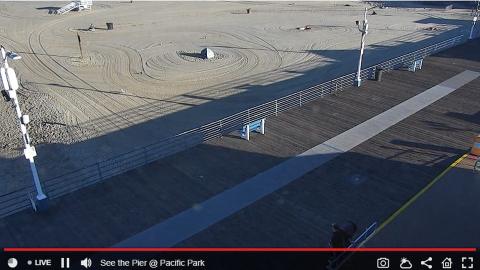
Pacific Park, the amusement park on the Santa Monica Pier, runs this camera, which it introduced in 2013 as a bird's-eye view of the pier's west end. It looks steeply down onto the deck, where a steady stream of visitors walks between the game stalls and stands; a big blue umbrella and the painted line along the walkway stand out, and on the right the water glitters beyond the edge of the deck. This is the one to check before heading out, to see how packed the pier is, or simply to watch it fill up on a warm weekend afternoon. Light is best from morning to early afternoon, because by late afternoon the sun shines straight off the sea into the lens.
Roller coaster track and rides from above the amusement park
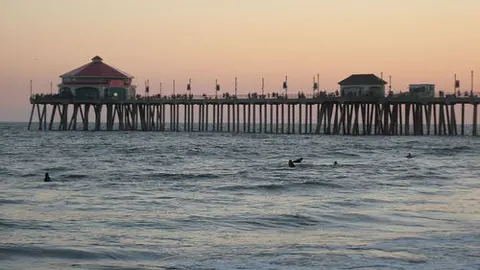
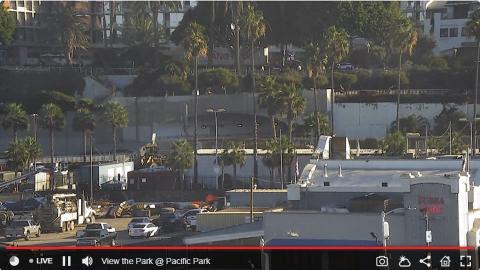
Pacific Park's second camera looks down over the rides themselves. A roller coaster's yellow track loops through the foreground and along the right side of the frame, the bright blue roofs of ride buildings and booths fill the middle, and beyond them the open part of the pier deck, painted with parking stripes, leads back toward the shore. When the park launched its cameras, this one was billed as giving 360-degree views of the grounds, so the angle can change from one visit to the next. Check it to see how busy the park is before you go; sunny afternoons bring out the colors of the tracks and roofs.
The Santa Monica Pier
The long, narrow Municipal Pier opened in 1909, built mainly to carry a sewer pipe out to sea, and in 1916 Charles Looff and his son Arthur built a pleasure pier alongside it. Together they run about 1,650 feet into the bay. The Hippodrome near the entrance still houses a carousel built in 1922, with 44 hand-carved horses, and the end of the pier is a favorite with anglers. Pacific Park opened on the pier in 1996, with the West Coaster and the Pacific Wheel, which the park bills as the first solar-powered Ferris wheel; after dark its LEDs run light shows over the water. A sign unveiled in 2009 marks the pier as the symbolic end of Route 66, although the old highway officially ended about a mile inland, at Lincoln and Olympic boulevards.
When to watch Santa Monica
Santa Monica sets its clocks to Pacific Time, UTC−8 from early November to March and UTC−7 the rest of the year. The beach looks southwest across Santa Monica Bay, so the sun goes down over the water, from around 4:45 p.m. in early December to about 8:10 p.m. in late June and early July. The pier is busiest on summer weekends and in the evening, when the wheel lights up. In late spring the marine layer, known locally as May Gray and June Gloom, can keep the coast under low cloud until the afternoon.
Around Santa Monica
Palisades Park runs along the top of the bluff, a narrow strip of lawns, palms and benches above the Pacific Coast Highway. A few blocks inland, the Third Street Promenade is a pedestrian street of shops and restaurants. The beach bike path follows the sand south past Venice toward Marina del Rey, and to the north the coast leads past Pacific Palisades to Malibu. The Santa Monica Mountains rise beyond the bay to the northwest.
Visiting Santa Monica
LAX, the main Los Angeles airport, lies about 7 miles to the southeast. The Metro E Line light rail ends at Downtown Santa Monica station, a short walk from the pier, which is often easier than finding parking on a summer weekend. Rip currents form along the beach, especially near the pier pilings, so pick a spot in front of an open lifeguard tower.