What the Rocky Mountain National Park live cams show
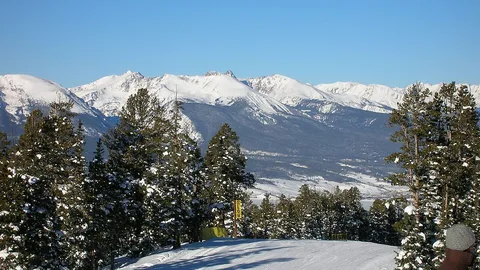
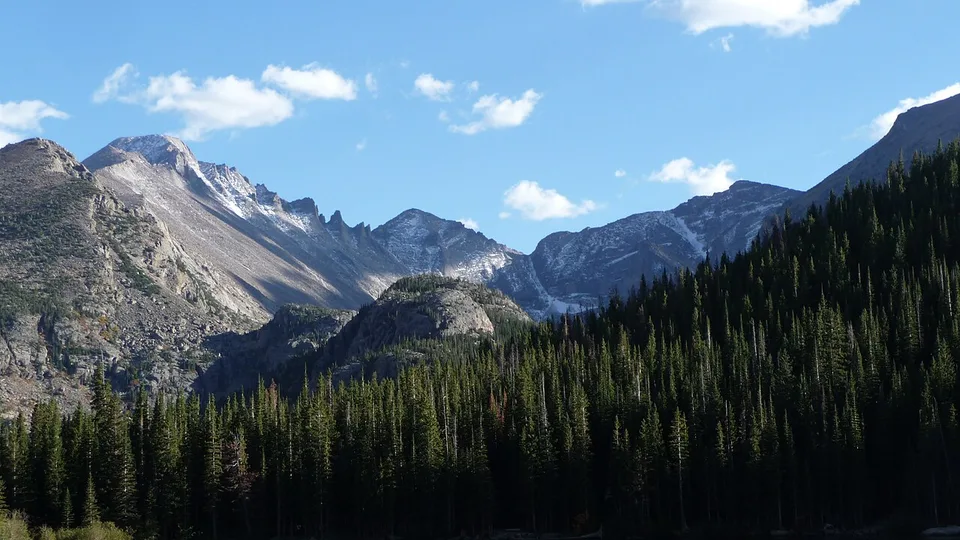
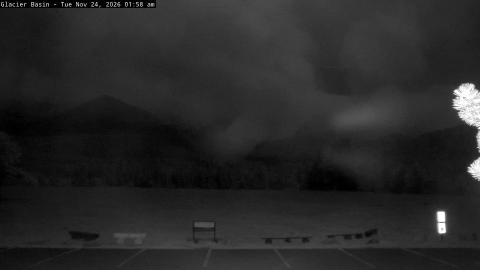
The peaks of the Continental Divide above Glacier Basin
The National Park Service takes this picture from a parking area near Glacier Basin Campground, on the Bear Lake Road. Log benches and an interpretive sign stand at the edge of a wide meadow, golden in fall and white in winter, with a line of pines across it. Behind rises the Continental Divide: on clear days the park names Thatchtop, Taylor Peak, Otis Peak and Hallett Peak along the snowy crest. It is a still image, not a video, and the reload button brings the latest one. It is one of the best views to check snow on the high peaks and clouds over the Divide.
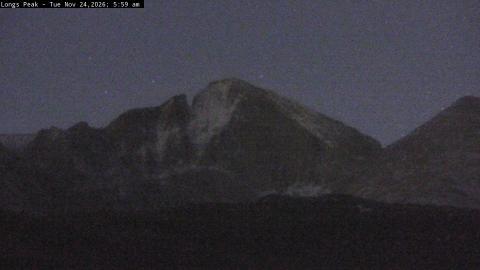
The east face of Longs Peak from Tahosa Valley
Seen from Tahosa Valley, south of Estes Park, Longs Peak fills this National Park Service picture. The tall, flat granite wall near the top is the Diamond, the sheer east face that makes the mountain easy to recognize; below it, ridges and snowfields drop to a dark band of forest. At about 14,260 feet, Longs is the highest peak in the park and the northernmost fourteener in the Rocky Mountains. It is a still image, not a video. Morning sun lights the face; by afternoon it falls into shade and clouds often build around the summit.
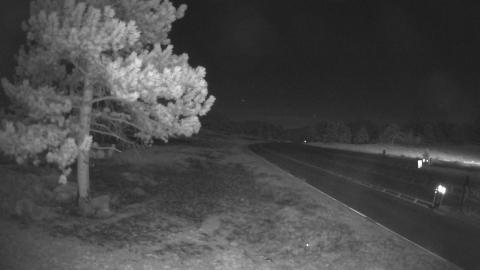
Cars arriving at the Beaver Meadows Entrance
The Beaver Meadows Entrance, on U.S. 36 just west of Estes Park, is the main way into the park from town, and the National Park Service watches it with this camera. A tall ponderosa pine stands on the left; the road curves in past grassland and rocky hills, with the lane markings and signs of the entrance station on the right. It is a still image, and the reload button brings the latest. Use it to see how much traffic is lining up at the gate, especially on summer and fall weekends, and whether the road is clear of snow.
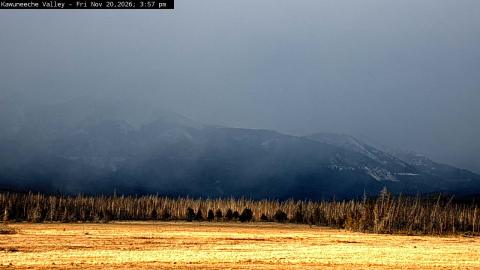
The Never Summer Mountains above the Kawuneeche Valley
On the quieter west side of the park, the National Park Service points this camera across Harbison Meadow, about half a mile north of the Grand Lake Entrance. Grasses and willows fill the valley floor, a band of conifers crosses the middle, and above them stand the Never Summer Mountains, their summits white for much of the year. The Colorado River begins its journey in this valley, and moose often graze in the meadows. It is a still image that the reload button brings up to date. Late afternoon light warms the peaks and the meadow.
The park on the Divide
Created in 1915, the park covers about 415 square miles, and roughly a third of it lies above treeline. More than 60 peaks rise above 12,000 feet, and Longs Peak, at about 14,260 feet, is the highest; its sheer east face, the Diamond, is famous among climbers. Trail Ridge Road, built in the 1930s, crosses the park between Estes Park and Grand Lake and climbs to more than 12,000 feet, the highest continuous paved road in the United States; it closes for the winter, usually from mid-October to late May. On the west side, the Colorado River starts as a small stream in the Kawuneeche Valley. Elk, bighorn sheep and moose live in the park, and Estes Park, the eastern gateway town, has its own live cams.
When to watch Rocky Mountain National Park
The park keeps Mountain Time, UTC−7 in winter and UTC−6 in summer. The sun rises between about 5:30 a.m. in June and 7:30 a.m. in late October, and sets between about 4:35 p.m. in December and 8:35 p.m. in late June. Mornings are usually clearest; in summer, thunderstorms build over the peaks almost every afternoon. Snow can fall in any month on the high peaks and covers them from October to June.
Around Rocky Mountain National Park
Estes Park borders the park on the east, with the Beaver Meadows and Fall River entrances a few miles from downtown. Grand Lake, Colorado's largest natural lake, lies at the western entrance, and Indian Peaks Wilderness adjoins the park to the south.
Visiting Rocky Mountain National Park
Denver International Airport is about 80 miles from the Beaver Meadows Entrance. An entrance pass is required, and in the busy season the park may use timed-entry reservations; check its website for current rules. The Bear Lake Road, past Glacier Basin, has a park shuttle in summer.