What the Plymouth live cams show
Moored boats and the barrier beach on Plymouth Harbor
See Plymouth keeps this camera on the roof of the Waterfront Visitor Information Center, looking east over the harbor where the Mayflower anchored in 1620. Below lies a wharf with fishing boats tied along its edge and a white excursion boat alongside. Past the pilings the harbor opens into a field of small boats on their moorings, with sailboats farther out, and on the horizon runs the long, low line of Plymouth Beach, the barrier beach that shelters the harbor from Cape Cod Bay.
It is a handy camera for checking the water before heading out: whether the surface is flat or ruffled, how high the tide stands against the wharf and how full the moorings are. The sun rises over the bay in front of it, and summer is the busiest season on the water.
America's Hometown
Plymouth calls itself America's Hometown. The Pilgrims came ashore in December 1620, and the following fall they shared the harvest feast remembered as the First Thanksgiving. Plymouth Rock, their traditional landing place, though no record confirms it, rests under a granite portico built in 1921 in Pilgrim Memorial State Park, the smallest park in the state system and its most visited. Mayflower II, a full-size replica of the ship built in Brixham, England, in 1956, is berthed at the State Pier. Pilgrim Hall Museum, founded in 1824, is described as the oldest continuously operating museum in the country, and the National Monument to the Forefathers, dedicated in 1889, stands 81 feet tall.
A working harbor
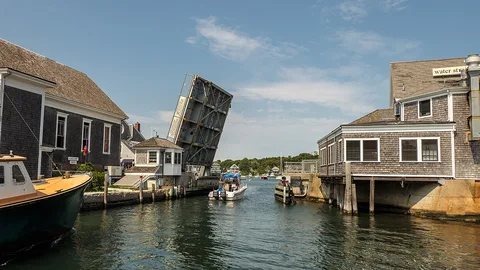
Plymouth Beach, a barrier beach about three miles long, shelters the harbor from the open bay, and the town's shore takes in the whole western side of Cape Cod Bay. Lobster and fishing boats, harbor cruises, whale watches and a seasonal ferry to Provincetown all work from the wharves along Water Street.
When to watch Plymouth
Plymouth keeps Eastern Time, UTC−5 in winter and UTC−4 from March to early November. The sun rises between about 5:05 a.m. in mid-June and 7:15 a.m. in late October and early January, and sets between about 4:10 p.m. in early December and 8:25 p.m. in late June. The camera faces the sunrise over the bay, so early mornings bring glare and color, and the afternoon light is softer. The harbor is busiest from late spring to early fall, when the moorings fill and the Provincetown ferry runs, and around Thanksgiving the town holds a parade downtown. In winter most boats are out of the water.
Around Plymouth
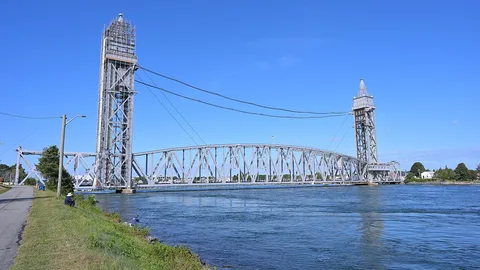
Plimoth Patuxet, the living history museum that opened in 1947 as Plimoth Plantation, lies south of the town center. Plymouth Beach is a long walk of sand known for its nesting terns and plovers, and Myles Standish State Forest spreads inland with ponds and trails. The Cape Cod Canal is about 17 miles south along Route 3.
Visiting Plymouth
Plymouth is about 40 miles south of Boston by Route 3, and Boston Logan International is the nearest major airport. The historic waterfront is compact: Plymouth Rock, Mayflower II, the visitor center and the wharves sit within a few minutes' walk along Water Street, with Burial Hill and Pilgrim Hall a short climb uphill.