What the Mission Ridge live cams show
The upper runs and the sea of clouds from the summit
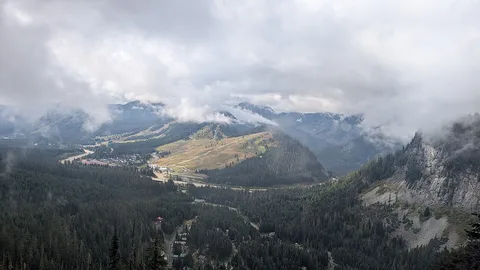
Mission Ridge's own camera at the summit patrol shack looks northeast. A lone pine stands in front; below it, the upper runs drop away in strips of early snow between stands of fir, with a snow gun parked on the slope, and past the ridges the valleys open toward Wenatchee and the Columbia.
On calm days in fall and winter a flat layer of cloud fills those valleys and the camera looks down on it from the sunshine. It is the camera to check how much snow has fallen up top and whether the summit is clear. The view can change between visits, as the camera is sometimes moved to another angle.
The slopes above Midway Lodge, looking south
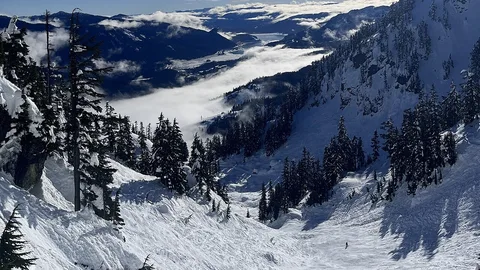
From Midway Lodge, partway up the mountain, this Mission Ridge camera looks south. A lift station stands on the left with a trail map beside it, a lift tower rises in the middle and the cleared slope climbs between rows of firs to the snowy ridge at the top. The lodge's deck rail and a ramp edge the bottom of the picture.
It shows the mid-mountain snow better than any other camera here: the bare ground or the first white cover, the grooming tracks, and the work trucks and snowcats that come and go before the season.
A run between the firs at the bottom of Chair 4
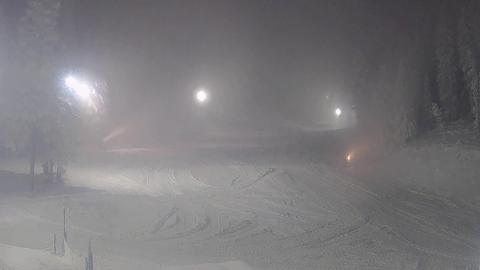
This camera stands at the bottom of Chair 4, the area Mission Ridge calls Mimi, and looks southwest up a run that climbs between steep, dark walls of fir. In the afternoon the sun sits right above the gap, so the picture is often backlit.
Down in this bowl the cloud often settles: on a gray day the whole view can turn white with fog while the summit camera is in the sun. That contrast is useful: it shows where the cloud layer sits and how far down the snow has come.
Bomber Bowl and the B-24
The ski area sits in the Squilchuck Basin, about 12 miles by road southwest of Wenatchee. The name Mission Ridge was chosen in June 1964 and the lifts started turning in the fall of 1966, with two chairs; two more followed in 1970 and 1972. On September 30, 1944, a B-24 Liberator bomber from Walla Walla crashed on the mountain, and in 1992 a wing section was hauled back up and mounted on poles above the run called Bomber Bowl, where skiers still pass it. The base is at 4,570 feet and the top at 6,820 feet, for 2,250 feet of vertical on slopes that face mostly northeast. The area averages about 200 inches of snow a year, and Bill Johnson, the 1984 Olympic downhill champion, trained here as a teenager.
When to watch Mission Ridge
Mission Ridge keeps Pacific Time: UTC−8 in winter and UTC−7 from March to early November. The sun rises between about 5 a.m. in late June and 7:50 a.m. in early January, and sets between about 4:10 p.m. in December and 9 p.m. in late June. Being on the lee side of the Cascades, it gets more sun than the passes to the west; on calm winter days a layer of cloud often fills the Columbia valley below, and the summit camera looks out over it. Morning is the time to judge new snow, while the sun is on the slopes that face northeast.
Around Mission Ridge
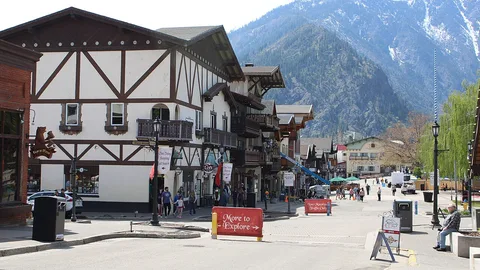
Wenatchee, the self-styled apple capital of the world, lies on the Columbia River at the foot of the mountain. Leavenworth, the Bavarian-style village in the Wenatchee River valley, is about 22 miles northwest of the city, and U.S. 2 continues west from there to Stevens Pass. To the south, Blewett Pass on U.S. 97 crosses toward Interstate 90 and Snoqualmie Pass.
Visiting Mission Ridge
The road up from Wenatchee climbs through orchards and then forest to the base lodge. Pangborn Memorial Airport (EAT), in East Wenatchee, has flights to Seattle, about 150 miles away by road over Stevens Pass or Snoqualmie Pass. Winter tires or chains are a good idea on the mountain road after a storm, and the ski area posts its conditions and lift status on its own site.