What the Florence live cams show
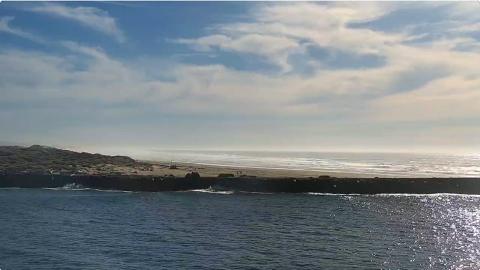
Siuslaw River bar and jetties from North Jetty Beach
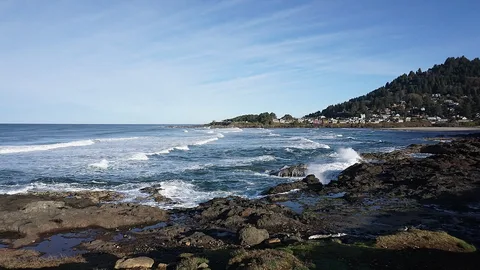
This camera belongs to WebCOOS, the research network of coastal cameras, and stands above the dunes at North Jetty Beach, at the mouth of the Siuslaw River. It looks over the beach grass toward the river entrance, where two rock jetties reach out into the Pacific and waves break across the bar between them. Its stated purpose is to show conditions at the river mouth and around the sandbars, the same things boaters check before crossing. On a calm day the channel lies smooth and blue; with a big westerly swell, white water spreads right across the entrance.
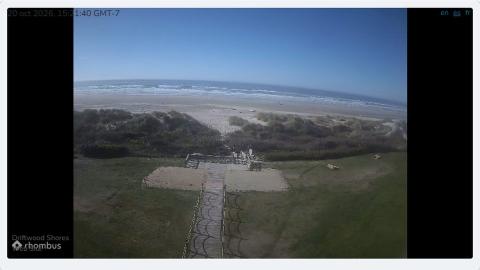
Heceta Beach dunes and wide sand north of Florence
From Driftwood Shores, the oceanfront resort on Heceta Beach north of Florence, this camera looks down a wooden stairway that crosses the lawn and the dunes to the sand. Past the dune grass the beach is wide and flat, with long lines of surf beyond and the horizon across the top of the picture. It shows how many people are out walking, how far the tide has dropped and what the sky is doing before you head out. The coast here faces west, so the afternoon brings the sun toward the lens and an evening glow over the water.
Where the Oregon Dunes begin
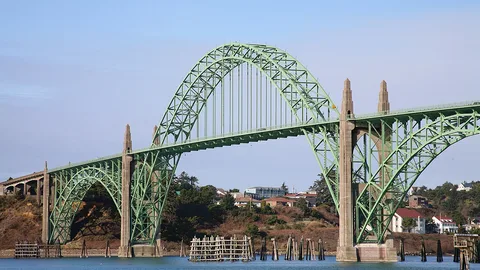
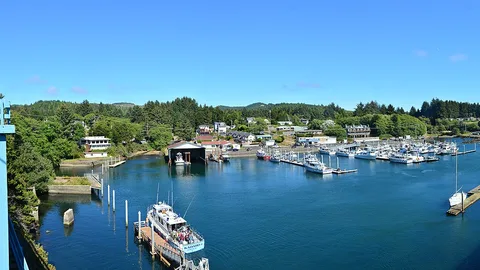
South of the Siuslaw, the Oregon Dunes National Recreation Area stretches about 40 miles to Coos Bay: the largest expanse of coastal sand dunes in North America, with some dunes rising around 500 feet above sea level. They helped inspire Frank Herbert's novel Dune. The river curls around the town before reaching the sea between two rock jetties, and its bar is the gate for the fishing boats of the Port of Siuslaw. Old Town, on the riverbank, keeps its wooden storefronts and docks below the Siuslaw River Bridge, an art deco drawbridge opened in 1936 and one of Conde McCullough's coast highway bridges. Florence is also remembered for an odd episode in 1970, when the state highway department used explosives to get rid of a dead whale on the beach, with messy results; a park in town now bears the name Exploding Whale Memorial Park.
When to watch Florence
Florence keeps Pacific Time, like Portland and Seattle: UTC−8 in winter and UTC−7 in summer. The sun rises between about 5:40 a.m. in June and 7:50 a.m. in early January, and sets between about 4:45 p.m. in early December and 8:50 p.m. in late June. Westerly swell shows best at the river mouth in winter, while summer afternoons often bring a strong north wind that moves the dune sand. Sunsets fall over the open ocean.
Around Florence
Heceta Head Light, the strongest light on the Oregon coast, stands about 13 miles north on its headland, and the Sea Lion Caves are close by. Honeyman State Park, with freshwater lakes at the foot of the dunes, is about 3 miles south, and Yachats lies about 25 miles north.
Visiting Florence
Eugene Airport (EUG) is about 60 miles east by Oregon Route 126. Dune buggies and other off-highway vehicles are allowed only in marked parts of the dunes. The river bar can be dangerous: the Coast Guard sometimes restricts crossings when the surf is high.